
Blog
How to remove a dishwasher
12.04.2026
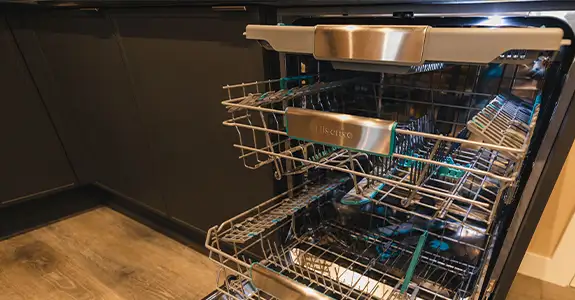
Dishwashers are one of the most essential parts of your kitchen, responsible for cleaning all of your dirty pots, pans and plates. This means that eventually it may be time to replace your dishwasher, repair it or you may just need an upgrade.
It is recommended to use professional help to remove your dishwasher, however, here is a DIY guide if you feel confident to do so yourself.
Disclaimer: This guide is for informational purposes. Hisense recommends professional installation and removal services to ensure safety and warranty protection. If you're uncomfortable working with plumbing or electrical connections, please consult a qualified technician.
Time: 30 – 60 minutes
Tools and equipment:
- Adjustable spanner
- Screwdriver
- Towels/ cardboard
- Bucket
- Gloves
Essential prep:
- Turn of power at the breaker
- Turn off water supply valve.
In some cases, all the connections will be behind the dishwasher, so the dishwasher will need to be removed before it can be unplugged and disconnected. In this case skip to step 6 first.
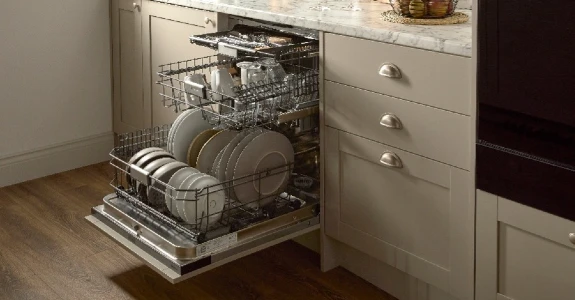
Step 1: How to disconnect a dishwasher’s power supply
1) Locate the electrical connection (junction box or plug)
Most likely in the UK your dishwasher’s power comes from a standard 13A socket. This is most likely located in the cupboard next to the dishwasher or above the countertop. The other, less common power supply is a Junction box which is hard wired to a dedicated circuit.
2) Safely disconnect the electrical supply
Unplug the plug from the socket. If your dishwasher power comes through a Junction box ensure that the power is turned off at the source before disconnecting.
3) Test that the power is off
Try turn on the dishwasher using the power button, if the power is disconnected successful it should not switch on
Professional recommendation: If you're unsure about electrical work, contact a qualified electrician
Step 2: How to un plumb a dishwasher’s water supply
1) Locate the shut-off valve for the dishwasher – in most cases the unit will have its own valve
The shut-off valve is most likely located under the sink, this is most likely a lever but could be a screw.
2) Turn off the water supply
Turn the shut off valve lever 90 degrees. In line with the pipe means it’s on and across the pipe mean’s its off. If you have a screw turn it anticlockwise until it is off
3) Place towels/ buckets down around the dishwasher
In case of any residual water from disconnecting it
4) Disconnect water line from dishwasher
Slowly loosen the nut on the end of the water supply pipe connected to the dishwasher. There will be some residual water dripping out of the connection, but this should quickly stop.
Warning: If high pressure jets of water escape when loosening the supply line nut then the supply has not been correctly cut-off. Check the valve again to ensure it’s the correct one and is fully closed
Professional recommendation: A professional plumber can ensure proper disconnection.
Step 3: Disconnect drain hose.
1) Locate the drain hose connection
The drain hose carry’s dirty water out of the dishwasher, should be located at the back of the dishwasher and runs through to the sink.
2) Loosen the clamp and disconnect hose
You may need a screwdriver to loosen the screw on the hose clamp
3) Drain any remaining water into a bucket
Empty any remaining water from the drain hose into a bucket
Step 4: How do remove an integrated door panel
This only applies to integrated/ built in models
1) Remove cabinet door panel from dishwasher door
Remove any visible screws using a screw driver, these will be side screws and top screws.
2) Unscrew hinges or release clips
If hinges are attached to the cabinet door remove these using a screwdriver
3) Set door panel aside carefully
Once all screws are loose remove the door and place out of the way.
Step 5: How to detach a dishwasher from the counter top
1) Locate the mounting brackets
These are typically under the countertop edge used to secure this dishwasher in place
2) Remove mounting screws securing unit to countertop
Use a screwdriver to unscrew the screws securing the mounting bracket in place
3) Remove side mounting brackets if present
The dishwasher may be secured using side brackets as well as top brackets
Step 6: How to pull a dishwasher out
1) Remove plinth/kick plate if needed
If your dishwasher has a kick plate at the bottom, remove this
2) Raise adjustable feet to create clearance
Your dishwasher may have adjustable feet that have been heightened, use the screw to lower them. There may be a screw to turn on the front of the dishwasher to enable raising the back leg or legs.
3) Protect the flooring with cardboard or towels
Place cardboard or towels down on the floor in front of the dishwasher and lift the front of the dishwasher on top to protect your flooring
4) Gently slide dishwasher forward
Pull the dishwasher out, sliding it along the floor
5) Check for any remaining connections
Slowly pull the dishwasher out and ensure there is no resistance from any remaining connections.
Professional recommendation: Dishwashers typically weigh 50-80 lbs so you may need to get help from someone else or a professional removal company. Also use an appliance cart to transport the dishwasher rather than carrying it and follow proper lifting techniques to avoid injury.

Post removal – what to do next
1) Check the area for leaks or water damage
Check the floor around the dishwasher or walls, if you dishwasher was built-in inspect the surrounding cabinets for water damage
2) Clean the space where the dishwasher was installed
Sweep the floor and wipe down the area to ensure there is not pools of water or debris left over
3) If you shut off the water for the whole house, then cap the water line and secure drain hose
Before switching the water back on, ensure the water line and drain hose is closed and secure
4) Prepare space for a new unit or cabinet filter
If any areas have water damage, ensure this is treated or replaced and keep the area clean for the new unit.
Follow how to stack and how to clean to keep your new dishwasher running smoothly.
Most removal jobs should be manageable DIY project when following proper safety procedures, if you feel unsure about any aspects, talk to a professional for help.
Now that you have successfully removed your old appliance, are you ready to upgrade to a Hisense dishwasher? Shop the full range here
Shop Freestanding Dishwashers for easy installation and reliable everyday performance, with selected models able to wash up to 16 place settings.
Shop Integrated Dishwashers for a seamless fit into your kitchen, combining smart performance with a clean, built-in finish. Installed neatly behind a cupboard door.
Find out how to keep your next appliance running smoothly with these guides