
What is Quantum Dot Technology and how does it work in Hisense TVs?
10.06.26

Ever wondered why some TVs produce colours that look almost too real?
From vibrant sunsets and lush green landscapes to the smallest details in your favourite films and games, some displays simply look more lifelike than others. One of the key reasons is Quantum Dot technology.
Quantum Dot technology helps TVs produce a wider range of colours, improved brightness and greater picture accuracy. It's the technology behind modern QLED TVs and plays a major role in delivering the vibrant, immersive viewing experience many people now expect from their television.
In this guide, we'll explain what quantum dots are, how they work and how Hisense uses Quantum Dot technology across its QLED TV range.
What is a Quantum Dot?
A quantum dot is an incredibly small semiconductor crystal, measuring between 2 and 10 nanometres in size.
To put that into perspective, thousands of quantum dots could fit across the width of a human hair.
What makes quantum dots special is how they react to light. When light passes through them, they emit a very precise colour depending on their size.
Generally speaking:
- Smaller quantum dots produce blue light
- Medium-sized quantum dots produce green light
- Larger quantum dots produce red light
Because each quantum dot emits a highly specific colour, they can produce far more accurate and brilliant colours than traditional display technologies.
Rather than relying on broader colour filters, quantum dots help TVs create purer primary colours, resulting in a more vibrant and realistic image.
The science behind quantum dots is complex, but the benefit for viewers is simple: richer colours and a more lifelike picture.
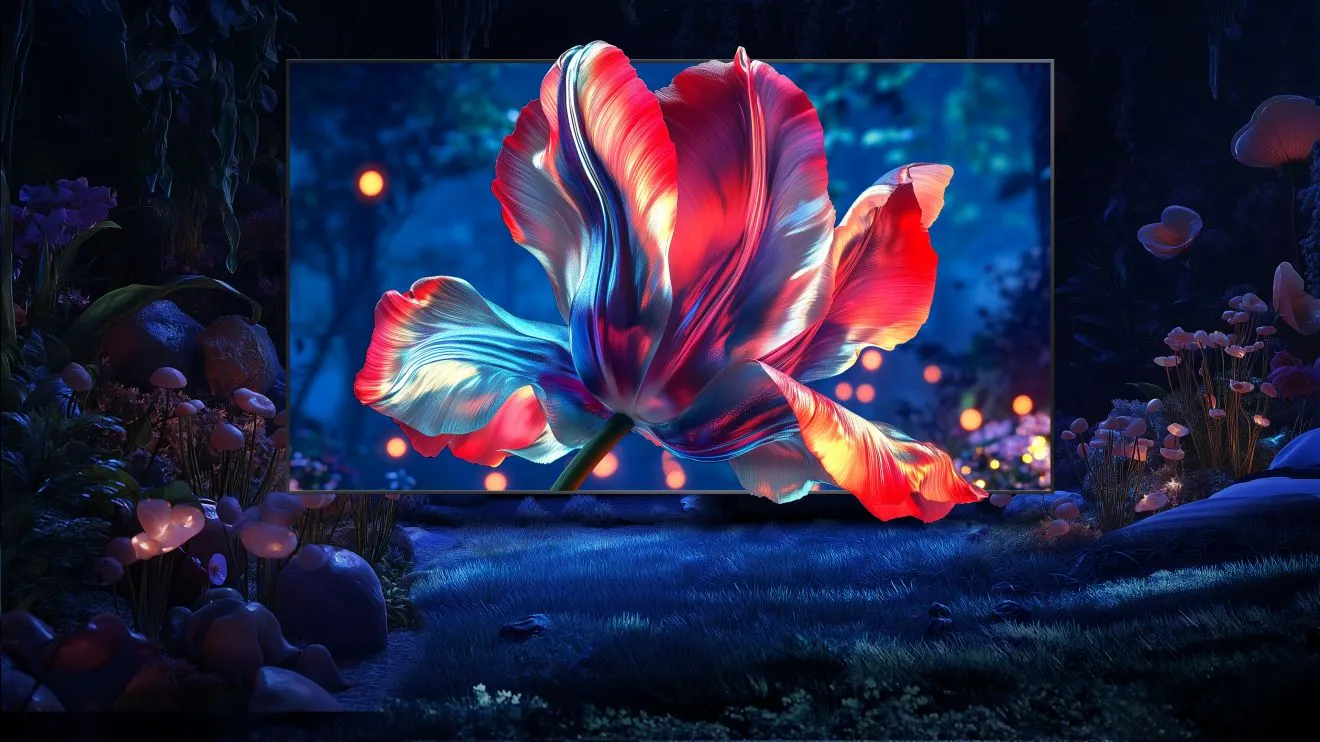
How Does Quantum Dot Technology Work in a TV?
In a Quantum Dot TV, a layer containing millions of quantum dots sits between the TV's LED backlight and the display panel.
As the backlight passes through this Quantum Dot layer, the dots emit highly precise red and green colours while allowing blue to pass through, creating a much purer illumination than traditional LED displays.
The display panel can then use this enhanced output to produce a significantly wider colour range and improved brightness, for exceptional viewing.
The result is:
- More vibrant colours
- Greater colour accuracy
- Improved brightness
- Better HDR performance
- Enhanced picture realism
Traditional LED TVs use colour filtering systems that can reduce brightness and limit colour precision. Quantum Dot technology helps overcome these limitations by creating more accurate colours at the source.
This is why Quantum Dot displays are often capable of producing over a billion shades of colour, so everything from films and sport to gaming and streaming, looks and feels more immense.
Quantum Dot vs Standard LED
Both Quantum Dot TVs and standard LED TVs use LED backlighting, but there is a significant difference in how they produce colour.
Traditional LED TVs typically use a yellow phosphor coating to create white light. This white light is then filtered into red, green and blue colours by the display panel.
While effective, this approach can result in colour loss and reduced accuracy.
Quantum Dot TVs take a more precise approach.
Instead of relying on broad colour filtering, quantum dots produce highly accurate red and green light directly. This creates purer primary colours and a much wider colour range.
For viewers, the difference is often most noticeable when watching colourful content such as nature documentaries, sport, animated films and modern games.
Is QLED the Same as Quantum Dot?
In simple terms, yes.
QLED stands for Quantum Dot LED and refers to TVs that use Quantum Dot technology to improve colour and brightness performance.
The Quantum Dot layer is one of the defining features of a QLED TV.
This means all QLED TVs use Quantum Dot technology, but Quantum Dot technology itself is the science that makes QLED possible.
Think of it this way:
- Quantum Dot = the technology
- QLED = the TV technology built around Quantum Dots
When you see a QLED TV, you're effectively looking at a television that uses Quantum Dot technology to deliver a richer and more vibrant picture.

Quantum Dot Technology in Hisense TVs
Hisense uses Quantum Dot Colour technology across its QLED TV range to help deliver exceptional colour performance and a more immersive viewing experience.
By combining Quantum Dot technology with advanced picture processing, HDR support and smart TV features, Hisense QLED TVs are designed to bring films, sport, gaming and everyday entertainment to life.
Popular Hisense QLED ranges include:
- E7 Series
- A7 Series
These TVs use Quantum Dot technology to produce billions of shades of colour, helping create more realistic and vibrant images across a wide variety of content.
Combined with features such as VIDAA Smart OS, Dolby Vision and AI-powered picture enhancement, Quantum Dot technology plays a central role in the premium viewing experience offered across the Hisense QLED range.
FAQs
What does Quantum Dot mean on a TV?
Quantum Dot refers to a layer of microscopic semiconductor crystals used inside a TV to improve colour accuracy, brightness and overall picture quality.
Is Quantum Dot better than LED?
Quantum Dot technology generally offers improved colour performance, brightness and HDR capabilities compared with standard LED displays.
Is QLED the same as Quantum Dot?
QLED TVs use Quantum Dot technology. Quantum Dot is the underlying technology, while QLED is the television technology built around it.
Are Hisense TVs Quantum Dot?
Many Hisense QLED TVs use Quantum Dot Colour technology to produce more vibrant and realistic images. Explore the Hisense QLED range to see available models.