
Blog
What is 4K? Everything you need to know
15.06.2026
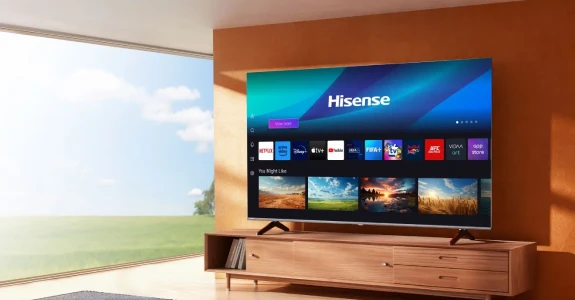
If you've been shopping for a new TV, you've almost certainly come across the term 4K Ultra HD. But what does 4K actually mean, and is it worth upgrading from an older HD TV?
Simply put, 4K refers to a television resolution that contains around four times as many pixels as Full HD. More pixels means more detail, sharper images and a more immersive viewing experience, especially on larger screens.
Today, 4K Ultra HD has become the standard resolution for most modern TVs, helping bring films, sport, gaming and streaming content to life with exceptional clarity.
In this guide, we'll explain what 4K means, how it compares to other resolutions, and why 4K TVs have become the preferred choice for many households.
What does 4K mean?
The term "4K" refers to the number of horizontal pixels displayed on screen.
Most 4K Ultra HD TVs have a resolution of:
3840 x 2160 pixels
That means the screen contains more than 8 million individual pixels working together to create the image you see.
By comparison, a Full HD TV has a resolution of:
1920 x 1080 pixels
This means a 4K TV displays approximately four times as many pixels as a Full HD TV.
The result is a picture that looks sharper, more detailed and more realistic, particularly when viewed on larger screen sizes.
You may also see 4K referred to as:
- Ultra HD
- UHD
- 4K Ultra HD
For most people, these terms mean the same thing and can be used interchangeably.

How does 4K compare to HD and Full HD?
One of the easiest ways to understand 4K is to compare it to older TV resolutions.
| Resolution | Pixel Count | Common Name |
|---|---|---|
| 1280 x 720 | 0.9 million | HD |
| 1920 x 1080 | 2.1 million | Full HD |
| 3840 x 2160 | 8.3 million | 4K Ultra HD |
| 7680 x 4320 | 33 million | 8K |
As resolution increases, the number of pixels increases too. More pixels allow the TV to display finer details, smoother edges and more realistic textures.
This becomes particularly noticeable on larger screens. As TV sizes continue to grow, higher resolutions help maintain picture quality and prevent images from appearing soft or pixelated. Technology that enriches your home viewing experience to exceptional levels.
What are the benefits of a 4K TV?
The biggest benefit of 4K is picture quality.
Because there are more pixels available, 4K TVs can display far greater levels of detail than HD or Full HD models.
Benefits include:
Sharper Images
See every image in hyper-realistic detail - from facial features to landscapes.
Improved Clarity
Crisp text and clean graphics make every viewing experience enjoyable, down to the finest details.
Better Large-Screen Viewing
As screen sizes increase, higher resolution becomes increasingly important. A 65-inch or 75-inch TV can fully showcase the benefits of 4K Ultra HD with a picture that stays sharp and detailed.
Enhanced Streaming and Entertainment
Experience movies, sport and TV in stunning 4K quality, with richer detail and a more immersive picture.
Future-Ready Viewing
Enjoy today's best content and be ready for tomorrow's entertainment as more shows and films are released in 4K.

Do you need 4K content to enjoy a 4K TV?
Not necessarily.
While native 4K content delivers the best possible picture quality, modern 4K TVs can also improve lower-resolution content through a process called upscaling.
This means HD broadcasts, older TV programmes and non-4K streaming content can still look better on a 4K television.
Hisense TVs feature 4K AI Upscaler technology, which intelligently enhances content to deliver a clearer and more detailed viewing experience.
Whether you're watching classic films, live TV or streaming services, 4K AI Upscaler helps transform everyday content into something closer to 4K quality.
What do you need to watch 4K?
Getting started with 4K is easier than you think.
To enjoy 4K content, you'll typically need:
- A 4K Ultra HD TV
- A stable internet connection of 25MBPS or above
- Content available in 4K resolution from your streaming service
- An HDMI 2.0 cable or higher for external devices
Many popular streaming platforms now offer 4K content, including:
- Netflix
- Disney+
- Prime Video
- Apple TV+
- YouTube
Hisense TVs powered by VIDAA Smart OS make it easy to access many of these services from one place.
Freely-enabled Hisense TVs can also provide seamless access to live and on-demand television without switching between multiple devices.

Is 4K worth it?
For most households, absolutely.
4K has become the standard for modern television viewing because it offers a noticeable improvement in detail and clarity compared with older HD resolutions.
It's particularly worthwhile if:
- You're buying a new TV
- You're upgrading to a larger screen
- You stream films and TV shows regularly
- You enjoy gaming
- You watch sport and live events
As more content becomes available in 4K, the benefits become even more apparent.
For many viewers, 4K represents the ideal balance between picture quality, accessibility and value.
Hisense 4K Ultra HD TVs
Hisense offers a wide range of 4K Ultra HD TVs designed to suit different viewing habits, room sizes and budgets.
Across the range, you'll find technologies such as:
- 4K AI Upscaler
- Dolby Vision
- VIDAA Smart OS
- AI Sports Mode
- Quantum Dot Colour on selected models
- Advanced gaming features on selected ranges
Whether you're looking for a family TV, a home cinema experience or a gaming-focused display, Hisense 4K Ultra HD TVs are designed to deliver outstanding picture quality and exceptional value.
FAQs
Is 4K the same as Ultra HD?
For most consumers, yes. Most televisions marketed as 4K use a resolution of 3840 x 2160 pixels, which is also known as Ultra HD or UHD.
Is 4K better than Full HD?
Yes. 4K contains approximately four times as many pixels as Full HD, allowing it to display more detail and sharper images.
Can you watch normal TV on a 4K TV?
Absolutely. Modern 4K TVs can display HD and Full HD content while using upscaling technology to improve picture quality.
How close should you sit to a 4K TV?
Because 4K contains more detail, you can sit closer to the screen without noticing individual pixels. The ideal viewing distance will vary depending on screen size.
Is 4K worth it on a smaller TV?
While the benefits are most noticeable on larger screens, a 4K TV can still provide improved clarity, detail and future-ready performance on smaller screen sizes.